For drone fleets
Your aircraft, their history, and what is still outstanding.
An aircraft-by-aircraft record of what you fly: the flights your crews logged, the requests still open, and the certificates you hold, with nothing in it you did not give us.
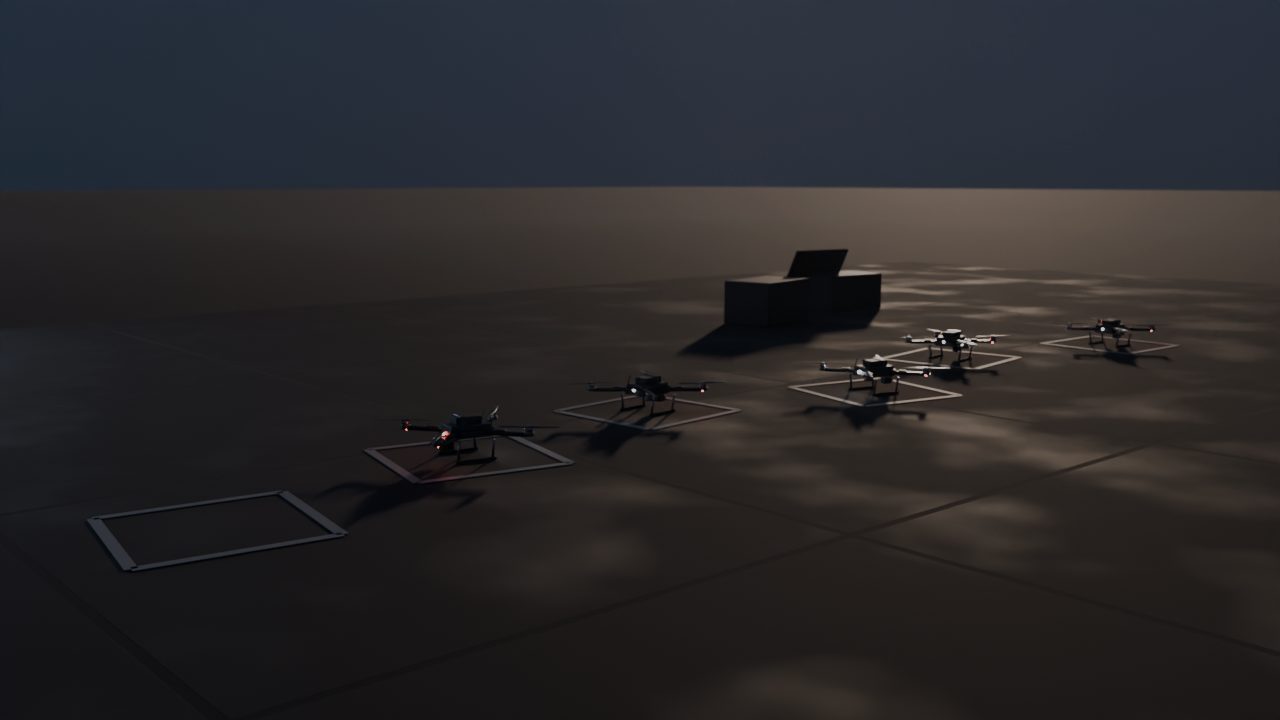
A parked show fleet, and the aircraft that joins it.
Five
A row on the pad is a row of serials. Each airframe has its own hours, its own repairs and its own paperwork, and from here they look identical.
Six
Then one more joins them. It arrives with a serial and a case of spares, and no history at all: no hours on this airframe, no repairs logged against it, and nobody who has flown it yet.
One
Somebody asks about a single aircraft. Which one flew the demo, who was pilot in command, and what has been swapped on it since.
Dated
The answer has to be a record rather than three people's memory. What you entered, in the order you entered it, with the gaps named rather than filled in.
The problem.
A test fleet turns over faster than its paperwork: airframes get rebuilt, serials move, and the pilot who flew the demo last week has left. A college program hands the operation to new students every spring. When somebody asks what this aircraft has been through, the answer is three people's memory.
What it does.
Trace
Each airframe has its own page: the serial, what has been swapped on it, and what it has flown since you entered it.
Log
Who was pilot in command, where, and what happened. A correction is a new row, so the history stays readable.
Answer
Requests to your crews, with what was asked, what came back, and what is still open on each aircraft.
Produce
One dated package for an insurer, a client, or the students taking the fleet over next term.
What you end up holding.
Two different views, kept apart. Fleet: what you own, what it has flown, who flew it. Maintenance: what was asked of a crew, what came back, and what is still open. Underneath both, the certificates and parts records you supplied, dated. No score, and no readiness figure.
Where we stop.
We don't say an aircraft is in a condition for safe operation. 14 CFR 107.15 puts that check on the remote pilot in command before every flight. We file nothing with the FAA. We hold what you gave us, naming what is missing from it rather than filling it in.
Keep your log where it is. Typing in your airframes does not mean retiring the spreadsheet, the binder or the group chat; they can all stay exactly where they are.